After 129 years, the finale of the Spearkan interstellar voyage
“Even the greatest tool has no use if the hand that wields it is too limp.”
— Theoburry Axin, first Apex of the Spearkan Federation
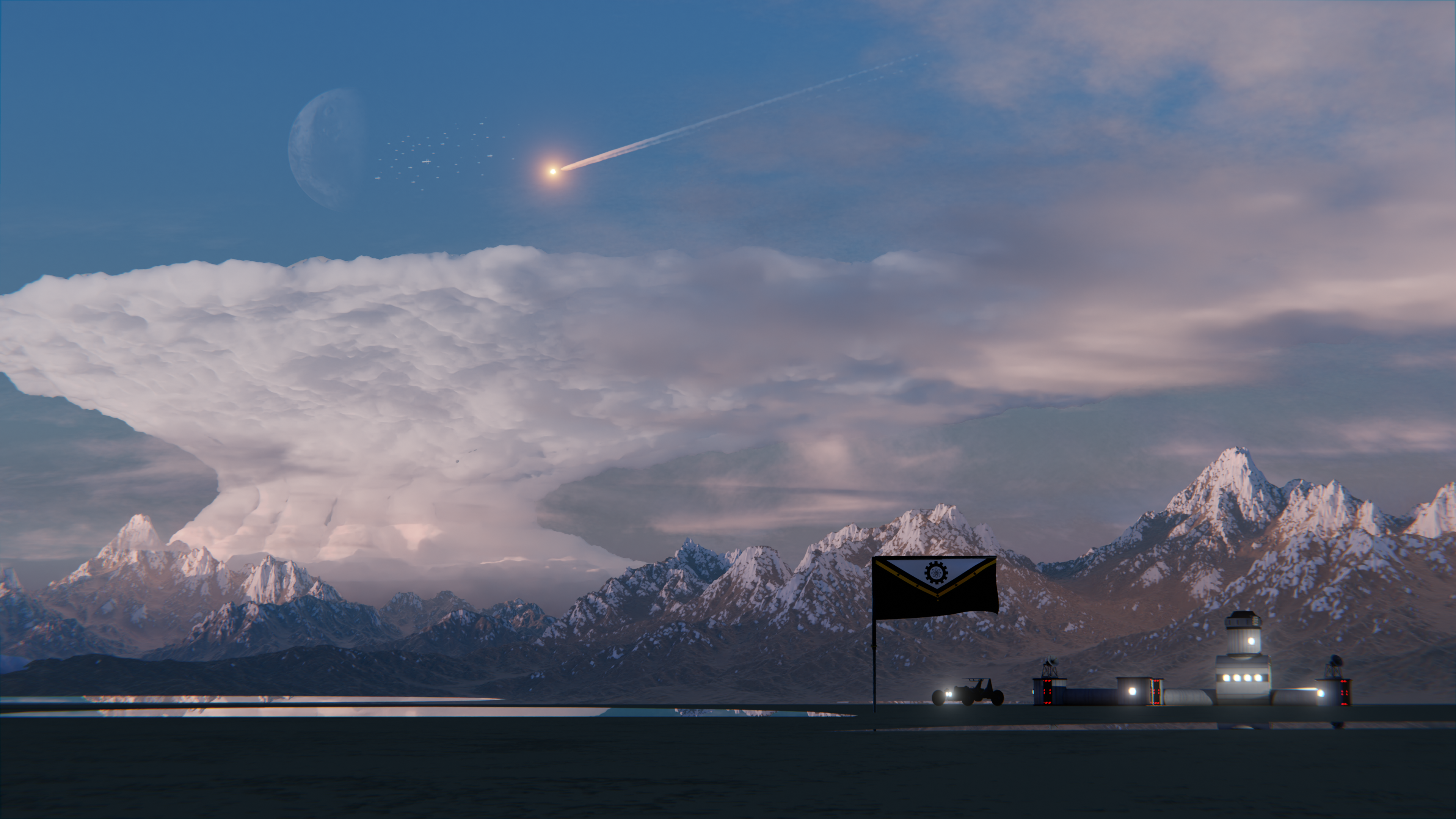
One century and 29 years ago, the upturned face of kerbalkind was illumined by the ignition of the Odyessy interstellar fleet, bound for the promised world of Selenya, some 43 light-years distant.
The Redemption project was, from start to finish, the single most ambitious project ever devised by Kerbalkind. To colonise another star system was one thing, but to send the population of an entire nation was another. Indeed, when Gus Leban released the manifesto that suggested such an operation, it would have seemed outlandish to most: Seven generation ships escorted by the largest fleet of fusion-powered spacecraft filled to the brim with stasis pods. Yet along with the manifesto a public, 200-page document was also published by Leban detailing every detail, every complexity, every contingency of the operation. Many continued to ask and many remained sceptical, especially old guard Spearkans such as Ex-Apex Joxton, who openly described it as deluded, mocking that technology alone cannot solve the Federations problems, and yet as he stayed behind as the last of the ships left, he would not realise how heavy those words were.
The theory was sound. The discovery of Selenya from the Nivix observatory had already been announced 2 years previously; spectroscopic data had confirmed a breathable atmosphere and temperature based on star luminosity and distance was confirmed to be within ideal ranges and Nivix station had already possessed an industrial base so orbital shipbuilding was possible. Towing an asteroid to serve as the resource base for the generation ship while serving as the generation ship for the Nexus contingent as well as accelerating Nivix’s production capacity was the easy part. The Stasis ships, however, would accommodate the majority of Nivix’s and, later, the generation ships industrial might. The sheer number of Spearkans to send for the trip ended up with a fleet of stasis ships, each carrying 50,000 pods, to number in the triple digits. Even so, there was an air of mystery about the project, Leban had been centre stage in the design of these ships utilising techniques of nuclear fusion and suspended animation so advanced that even today, both on Kerbin and on Selenya, many have struggled to replicate his technology, a process that sadly died with him only two years before the Selenyad began.
While the project was supposed to last for 5 years, a combination of refining issues, design flaws, looming economic woes and early unrest caused the project to instead run for 9. Yet, the result was impossible not to notice. On July 20th, 2083, the entire population of Kerbin laid witness to a massive lightshow as the massive, tri-cycle fusion engines of over a hundred stasis and generation ships roared to life. The plumes made by the exodus were visible for over a week as the ships began their course to Selenya at half the speed of light. Yet when the trails were at last gone and the final goodbyes were made on the diplomatic level, three major events would make sure that, even if the fleet, nicknamed the “Selenyad”, made it, things would never stay the same again.
The first would occur on T+6 years, with the publishing of the Bastion Files, a damning report not just on the Federations military capabilities, but on various levels of its military and political leadership: It began with an investigation on what caused its operations on the Minor Baskay war to fail so severely, why so many died on Basilian soil for what ultimately became nothing. The report highlighted the overwhelming presence of cronyism within its military and design staff, highlighting how, despite its technological progress, its doctrine was so steeped in Civil war schools of combat, adaptations to an ever-changing field of combat was ignored outright: Planes favoured agility over detection range, tanks and APCs were preferred over more modest yet efficient combat systems and its navy fell so far into R&D rot they had to license-produce hulls from foreign buyers, with the only domestically-made hull being the comically atrocious Abzan-class battle barge. This rot in its military intelligencia had also been discovered to seep into its political spheres too, with many of its ministers having short-circuited their military and political planning to suit their ideological goals. A leak this severe was too much to bury: this rot, one of the greatest reasons for the Selenyad in the first place, that the Federations safety was under threat, was as much internal as external. Immediately, calls began in the generation ships for change, though initially division was abound on what change exactly was asked for.
However, the events of T+27 years would change that, a small asteroid slammed into Generation ship Elohim, destroying it along with 12 stasis ships from the debris. Half a million Spearkans died in in the space of only a few minutes. The people in the remaining six generation ships were stunned, the authorities even more stunned. Even with what debris that could be scrounged being repurposed into a makeshift whipple shield it barely improved spirits, and voices demanded to know if this was a preventable incident or even just if more could have been done. The provisional council could barely reply; instead, they scrounged up the situation by sending out a probe in advance; perhaps they hoped the situation could be salvaged by being able to draft up colonisation plans early.
Yet, when the Telemachus probe reached the Ravos system and retransmitted the details 22 years later at T+49 years, the results were nothing like what was thought. Selenya consisted of five island continents, yes, but the land was completely barren; all biosignatures were strictly limited to the oceans and even with the finest of readings, no notable life forms were detected. Selenya was a young planet; habitable, yes, the readings already showed that, but the only life came in the form of single-celled archaea; no plants, no animals, nothing to build a new home around but sand, rock under weather systems unchained by flora or fauna.
This was the breaking point, the administrators convened an emergency council in the Nexus Hab. Arguments devolved into sheer rage; why did they choose this? Why was this not found sooner? How could a nation of millions survive in a wasteland that offered nothing for them? How can we even survive in a nation full of elitists who think they know all the answers? The session lasted for weeks, many honest discussions were had in the midst of the fighting. So much had changed, not only the fleet but the people too, those who grew up in the generation ships developed yet another subculture, with great adherence to the material and doing everything possible for the sake of sustainability: this, leading to the mapping and surveying of Selenya, evolved into a new Technogaian ideology, positing that the new Spearkan culture, if it wished to survive, if not thrive in this new world, should serve as stewards of a new paradise away from Kerbin, it pushed that their paradise, its namesake, could not merely be given to them, but it must be made, not by cronies or intellectuals, but together, as a people, as unified in goal as they are differentiated by profession, preference and passion. This ideology spread like wildfire, particularly within the Nexus, Verwelm and Zimi habs.
At the final day of the council, the Spearkan Federation was officially declared disbanded, its structure deemed obsolete in a changing environment. In its place, rose the Spearkan Union, a loose political organisation consisting of 6 founder states that made up the former Federation. The Greater Council would be replaced by a Spearkan Parliament consisting of the elected council members of each nation, each nation could send a set number of MPs depending on population and Bearers, Presidents or any other national leader could not run for MP. The Apex would be elected from an MP chosen by each nation by primary and would run in a proportional system. Aspects of the greater military, planetary economy, civil and ethics legislation, international infrastructure and standardisation laws would be managed by the SU while domestic economies, tariffs, taxes and local infrastructure would be managed by the constituent nations.
To reflect the changes, the generation ships themselves became nations of their own:
Nexus became the Republic of Axia, named after Ex-Apex Axin, who ended the war and founded the Federation. With the exception of the COE (Citizenship Once Educated) law which it abolished along with most others, it is the most similar to the old Spearkan institutional framework with its Greater and Lesser councils comprising much of the old brass. Despite this, their scientific culture has been enhanced as its intelligencia, previously consisting of the old Nexan population only, now serve as the bulk of the population. It is the forefront of scientific advances in the Union and many groups work tirelessly not only to seek the secrets of the universe and to replicate Lebans technology.
Esperia, formerly Bastion, had evolved to develop a pseudo-martial culture focusing on strategic wargames. Unlike the decayed cronyism of old, military development is not based on higher up figures, but instead through hypercompetitive wargames and design development: anyone who wants to innovate can innovate, provided their ideas have merit.
Verwelm developed the most esoteric change yet. Unlike the other habitats, which stayed insular, the Verwelm habitat kept close eyes on Kerbin monitoring its developments. In particular, the Ikonic culture that developed after was as inspiring as it was unnerving to the former Verwelmi, the cultural change, now reflected in the fledgling nation of Rast, looked inwards not from a scientific lens like most others, but in developing a new futurist culture that took on the basic tenets of the Omnichronocratic project and turned it to its head, predicting how the Rasti and other Spearkan identities evolve and change from its many influences and shows visions of what how the Union could look under a fully terraformed Selenya and of experimental new cultural projects it can manifest in colonies and habitats across the Ravos system.
Baske was the only independent nation to retain its name. Its strong culture stemming from ties to the historic mountains that filled Baskays centre changed only to seek new frontiers from the asteroids in the Ravos system, many have already sought out bids and favours to claim the stasis ships for mining once the inhabitants have been disembarked. Unlike the others, they insist on being a spacebound nation, living only in its generation ship and whatever new habitats they can either buy or build.
Arcadios, formerly Osten, have taken the technogaianist philosophy to a wide range of aspects of society and are considered the frontrunners in the pending Selenya terraforming project. Here, art and science have merged through biotechnology to create new canvasses both for the agricultural space and to design and imagine ecosystems and designer organisms derived from Kerbins and Seleyas embryonic life that could populate its lands and seas both at home and across the system.
While technically headquartered in the Zimi habitat, many among the new republic of Myzzia were the technicians that worked on each of the generation and stasis ships, many of them growing a new, entirely novel culture that subsumed the previous Spearkan Zimiite culture in favour of a rugged, technical and near-anarchistic state where the peoples identity is intertwined with their equipment, resulting in a spartan, resourceful system that heavily favoured modularity in their designs. The Myzzian system has already been the subject of curiosity among the other nations and such influence is already going through their systems too.
Despite these monumental changes, their fates were not set in stone. A combination of cascading failures, debris strikes and stasis pod failures threatened to reduce the population to a nonviable amount. Through the last legs of the voyage, a further half million Kerbals would be lost through these errors.
The end of the Selenyad would mark one last blow that threatened the end of the Union in its crib, while the Generation ships maintained course, the same could not be said for the others. Despite massed efforts from the maintenance teams, 75 time-dilated years worth of decay took its toll on the systems. A few exploded on the spot while most veered off course for a slew of different reasons: Engines were burning too slowly, some too quickly, Navigation systems veered the ships off course while others veered off as pods sheered off their superstructures.
Yet, as the engines of a hundred ships finally laid to rest, the worst was over. Slowly, but surely, with the habs and stasis ships that remained, the Selenyan surface grew with activity as the Unions substituent states raised arcologies housing its surviving population as, over the course of another few years, the occupants of the surviving stasis ships were reawakened from their quarter-century long slumber, their citizenship being chosen by preference between each of the nations. The future of the Spearkan Union is still uncertain: Unpredictable weather formations threaten to destroy the early arcologies, food supplies are never certain as they have to make do with the life they brought with them and there is no where the many lost stasis ships remain in the cold reaches of space. The path ahead is uncertain and it could be years before it could be said for certain, but there is a lot of promise for the Spearkan Union in a brand new frontier in the Ravos system.
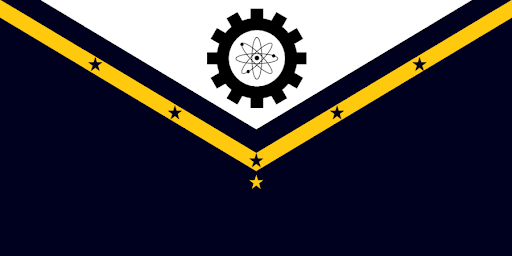
[Meta] This post is largely written by the old KP player Spearka, who first created the nation of Spearka and who has graciously continued to provide lore and writings to me even after his departure from the game. I wanted to respect the lore and legacy he created, so this epilogue serves as a tribute to Spearka, both the nation and the player.